
For local practices and businesses, AI search optimization has fundamentally changed the digital marketing landscape. When a local patient searches for "best cosmetic dentist near me" or "eye doctor that accepts VSP insurance," they are increasingly met not with a list of ten links, but with a single, comprehensive answer synthesized by an AI model, known as the AI Overview or Search Generative Experience (SGE).
To grow your business in this new digital market, local businesses, like dental and eye care practices, must move beyond traditional SEO to embrace Generative Engine Optimization (GEO) and Answer Engine Optimization (AEO). This new discipline requires specific best practices and strategies for AI search optimization.
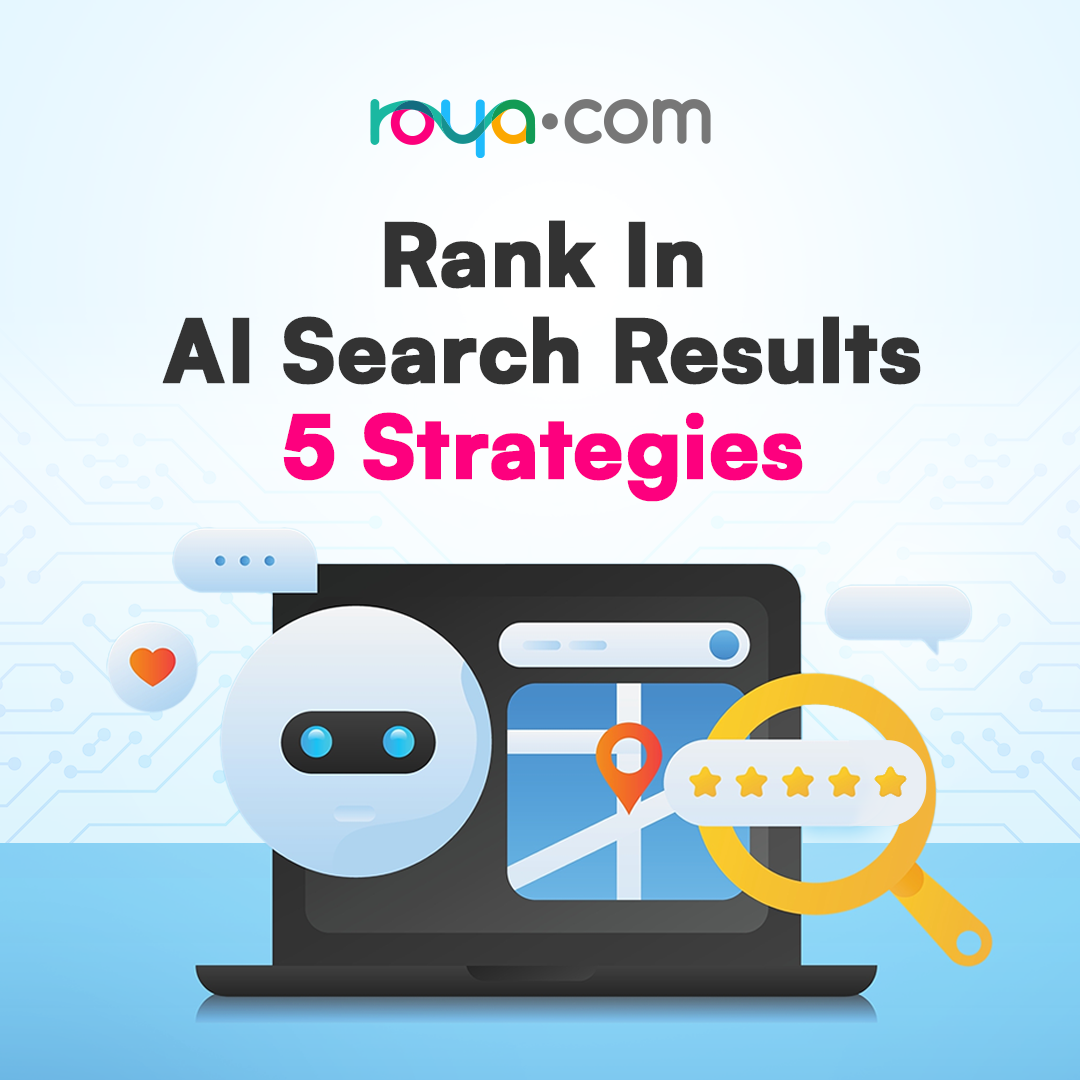
Here are five essential strategies to ensure your practice becomes a trusted source cited directly in AI search results:
1. Build Conversational Q&A Content for AI SEO
AI models excel at generating clear, concise answers to conversational questions. For effective AI search optimization, your content must be structured to feed the AI tool exactly what it needs.
Anticipate Patient Searches: Base your content strategy on the exact, long-tail questions patients ask your staff every day (e.g., "How much do dental implants cost in [Your City]?" or "What are the common side effects of cataract surgery?").
The Direct Answer Block: Start the relevant section of your content with a short, factual, and definitive answer. Think of this as the essential fact that the AI can easily extract.
Example: Use a heading like "What is the recovery time for LASIK? "followed immediately by: “The typical visual recovery time for LASIK eye surgery is 24 to 48 hours, with full stabilization usually occurring within a few weeks.”
Use Scannable Structure: Utilize a clear H2 and H3 heading structure, bulleted lists, and numbered steps. AI loves structured data because it is fast and easy to extract and summarize.
2. Develop Generative Engine Optimization: E-E-A-T (Experience, Expertise, Authority, Trust)
AI search engines place massive emphasis on trust. Google’s E-E-A-T guidelines are critical because AI will only cite sources it deems highly credible, especially for medical-related topics, like eye care or dental care. To succeed with AI search optimization, you have to consistently prove your authority over time.
Display Clear Credentials and Certifications: Ensure relevant service pages name the where the expertise comes from with professional credentials, relevant licenses, or industry certifications (e.g., licensed contractor, certified mechanic, accredited interior designer). Link this back to a detailed professional bio or an "Our Team" page.
Demonstrate Expertise with Data and Sources: When discussing industry best practices, product specifications, or service standards, cite the source, or equipment specifications. Reference reputable industry bodies, established organizations, or peer-reviewed data. This signals factual accuracy and depth of knowledge to the AI search engines.
Utilize Schema Markup: Implement Schema markup on your website, specifically FAQPage, HowTo, and LocalBusiness schema. This is a technical signal that tells the AI exactly what information your content contains, increasing your chances of being featured in featured snippets and improving your overall AI search optimization.
3. Build Hyper-Local Visibility Through Reviews and Citations
AI search engines and platforms take public sentiment into account and verified location data when making a local recommendation. This is where your reputation management directly influences your ranking in AI search results.
Detailed Reviews are Data Points: Actively encourage customers to leave detailed reviews that mention specific services, procedures, and staff members (e.g., "Dr. Smith made my wisdom tooth extraction painless" or "The team fixed my glasses prescription perfectly"). AI uses this descriptive language to understand the context of your services.
Maintain NAP Consistency: Ensure your Name, Address, and Phone Number (NAP) are identical across your entire online presence: your website, Google Business Profile, Yelp, local directories, and healthcare portals. Inconsistencies confuse AI and erode trust.
Update Your Google Business Profile (GBP): Use the GBP "Posts" feature to publish real-time updates on hours, specials, new equipment, or community events. AI systems value this "fresh data" signal for local relevance.
4. Prioritize Topical Authority with Content Clusters
AI favors websites that show comprehensive knowledge over those that just scratch the surface. An advanced AI search optimization strategy involves building topical authority.
Pillar Content: Create a comprehensive, long-form guide on a broad subject, such as "A Complete Guide to Modern Vision Correction Options."
Supporting Content: Link from that pillar page to several detailed, specific articles (the clusters) that answer niche questions, such as "Comparing PRK vs. LASIK Recovery Times" or "What is ICL Surgery and is it Right for Me?"
Online Footprint: This cluster structure proves to the AI that your practice is the definitive, authoritative entity on the entire subject, making your practice more likely to be cited in a synthesized AI answer.

5. Technical Elements for AI Search Optimization: Structured Data
Even the most authoritative content won't rank if the AI can't easily crawl and understand the site. Technical SEO is the foundation of good AI search optimization.
Crawlability: Ensure your site's structure is clean and that AI bots (like Google-Extended and GPTBot) are not blocked by your robots.txt file.
Page Speed and Mobile-Friendliness: The majority of modern searches happen on mobile devices. Fast-loading, mobile-responsive pages are an immediate ranking signal for AI systems, demonstrating a quality user experience. Use tools like Google PageSpeed Insights to check your mobile performance.
Clean HTML: Use correct HTML hierarchy (H1 for the title, H2 for main sections, etc) and avoid burying important information in complex code or unreadable PDFs. Simple, clean code makes it easy for the AI to ingest your facts.
The shift to AI search is not a threat; it's an opportunity for local experts like eye care and dental practices to win new visibility based on actual expertise and trust. By focusing on direct, conversational content, solidifying your authority, and mastering these five digital marketing for AI strategies, you can position your business to be the definitive recommendation in your local market.
Frequently Asked Questions
Q1. What is the difference between SEO, GEO, and AEO?
These three terms describe different approaches to ranking:
SEO (Search Engine Optimization): Focuses on helping your website rank higher in the traditional Search Engine Results Page (SERP). It prioritizes factors like keywords, links, and technical health.
AEO (Answer Engine Optimization): Focuses specifically on optimizing content so that it can be extracted and used by a search engine (or AI model) to provide a single, immediate, direct answer, often appearing as a Featured Snippet or a direct quote. AEO prioritizes concise, factual answers to specific questions.
GEO (Generative Engine Optimization): This is a specialized, comprehensive form of AI search optimization. It focuses on the strategic combination of AEO (providing the right answer) and strong local SEO (proving your E-E-A-T and local relevance) to ensure your business becomes the trusted source cited in the synthetic, often locally-aware, AI Overview.
Q2. How often should I be updating my website content?
For local services, consistency is key. We recommend publishing at least one new, high-quality piece of content per month that directly addresses a specific patient question or local industry trend. Furthermore, you should audit and update your core service pages (like pricing, insurance details, or procedure descriptions) every three to six months to ensure maximum freshness and accuracy, which signals high trust to AI models.
Q3. How does Schema Markup help me rank in AI Search?
Schema Markup is a form of structured data that you add to your website's HTML to help search engines better understand the context of your content. By implementing specific schema types, like FAQPage (for the questions and answers in this section) or LocalBusiness, you are essentially giving the AI an official, machine-readable summary of your data. This makes it far more likely for your information to be accurately pulled into an AI Overview or a rich result featured snippet.
Q4. If AI search gives patients the direct answer, why will they visit my website?
While the AI Overview provides quick answers, it rarely contains all the necessary details or the all-important Call-to-Action (CTA). Patients will click through to your website for:
Trust and Verification: To confirm the source of the information and view the authoring doctor or expert's credentials (E-E-A-T).
Next Steps: To find your location, read reviews, or click the link to book an appointment directly.
Depth of Information: To read more nuanced details that the brief AI summary left out.
Q5. Is my Google Business Profile still important if I’m focusing on AI search optimization?
Absolutely. Your Google Business Profile (GBP) is arguably more important than ever. AI models use GBP as the definitive, verified source of local information, your hours, service area, and, critically, your patient reviews. A well-maintained, highly reviewed GBP provides the foundational trust element that AI models require before recommending your practice to a local user.